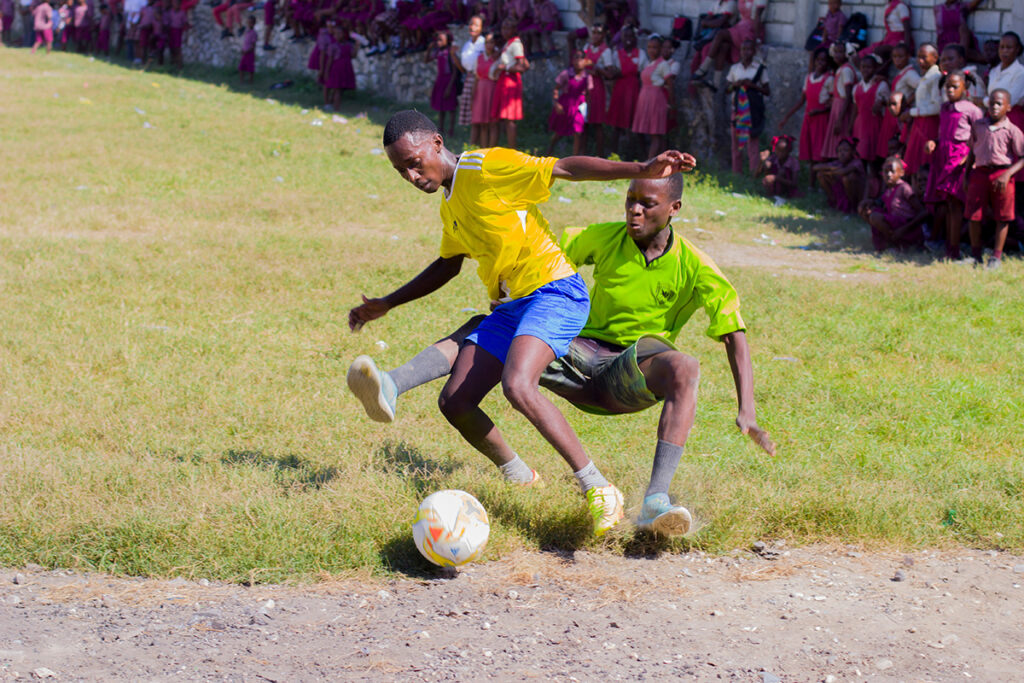
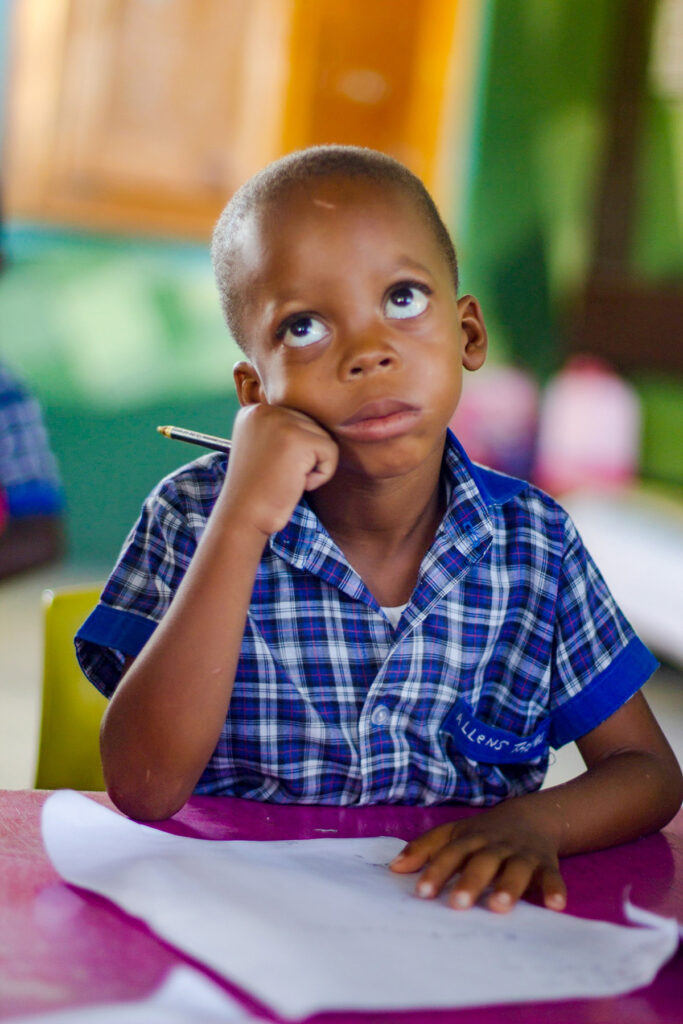
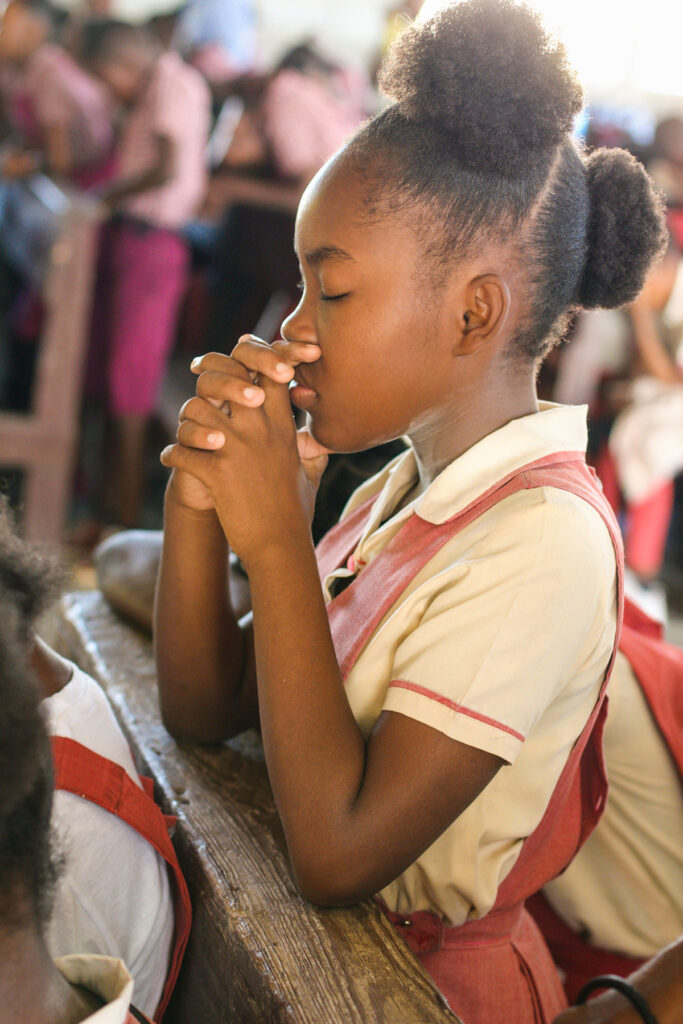
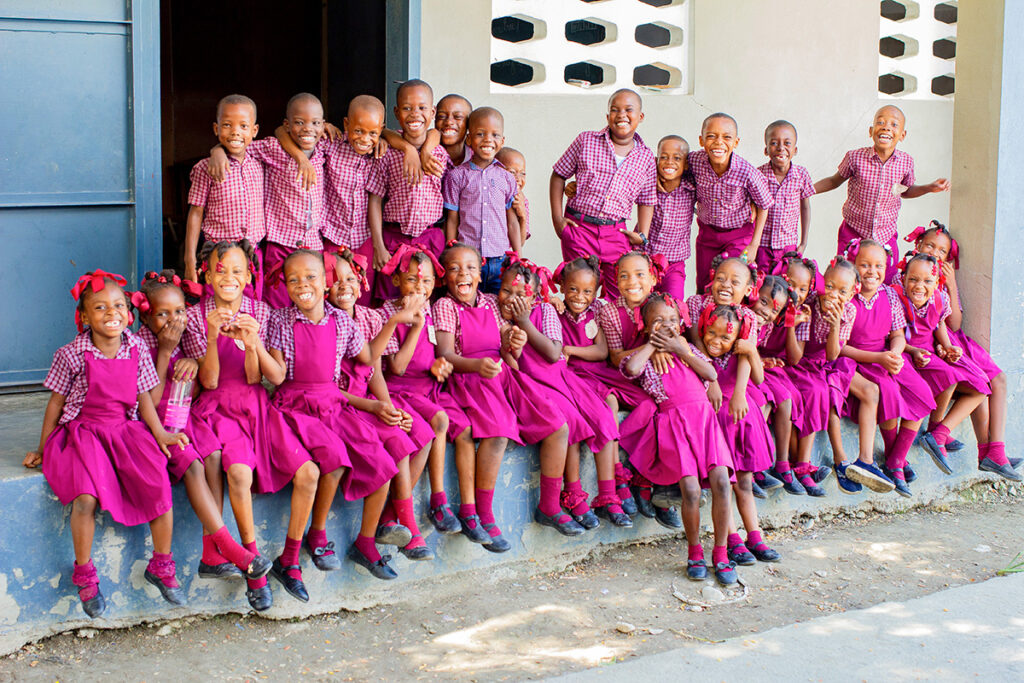
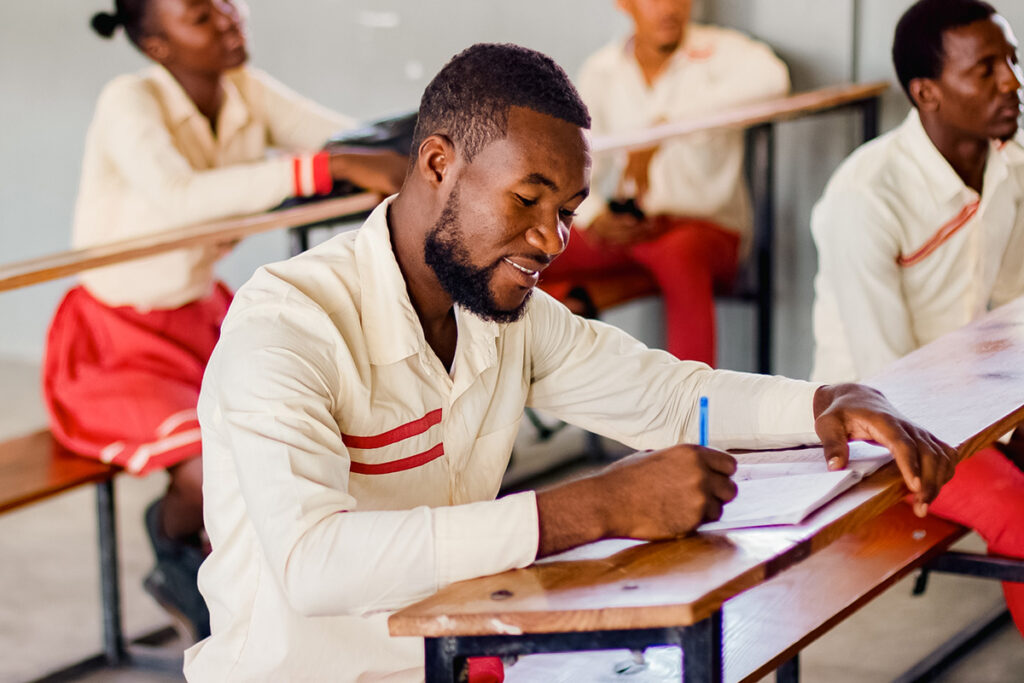
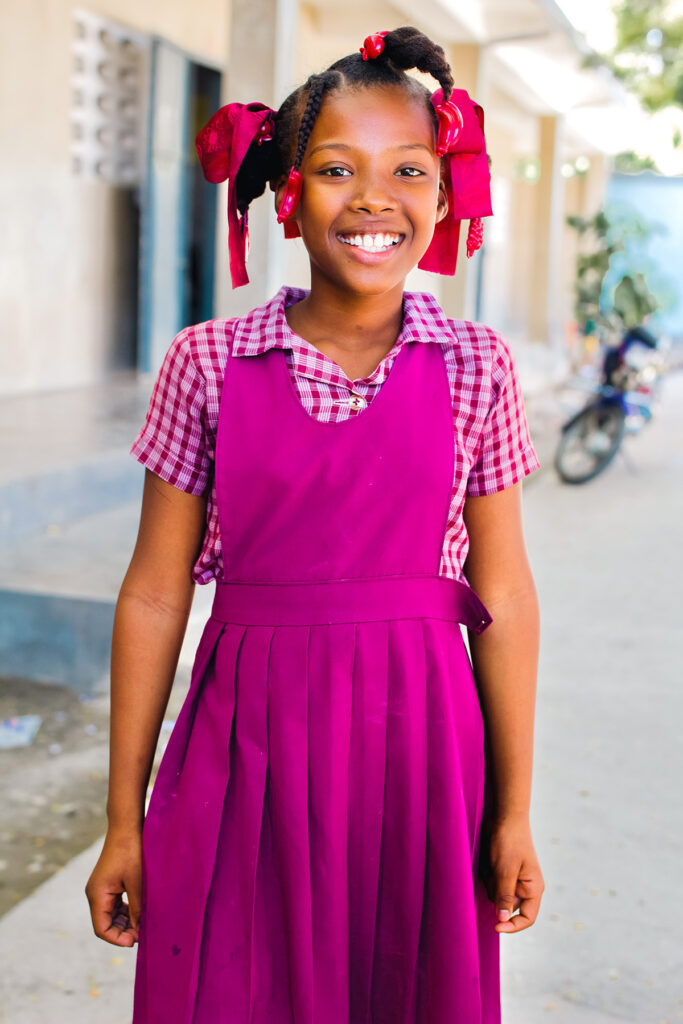
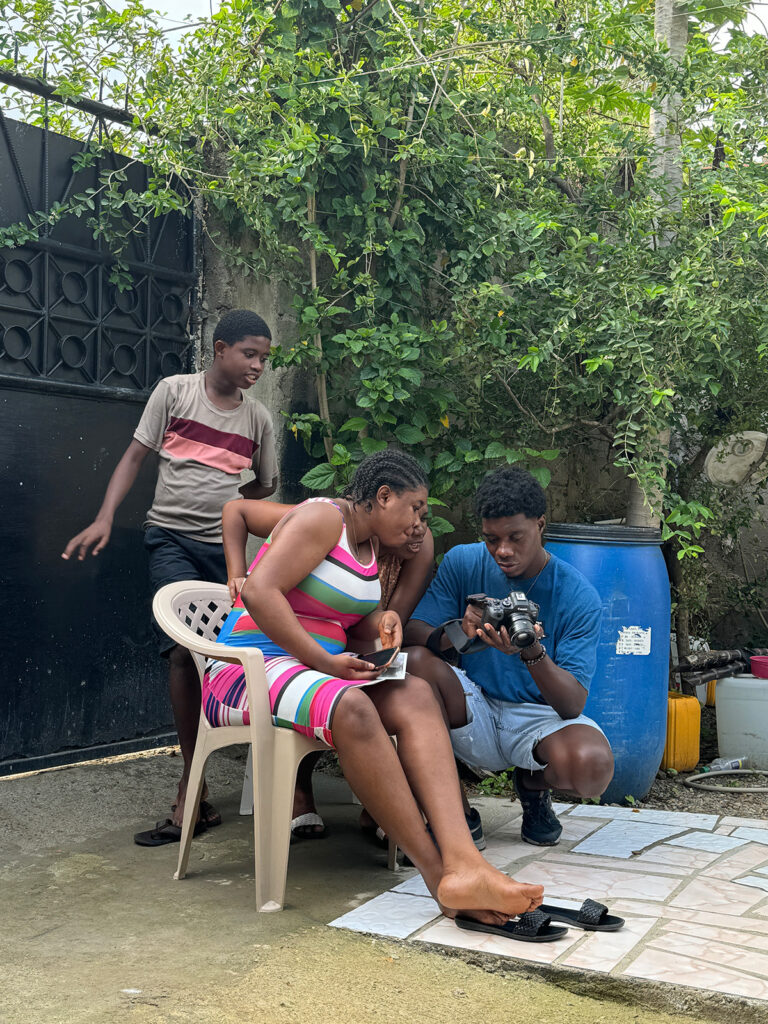
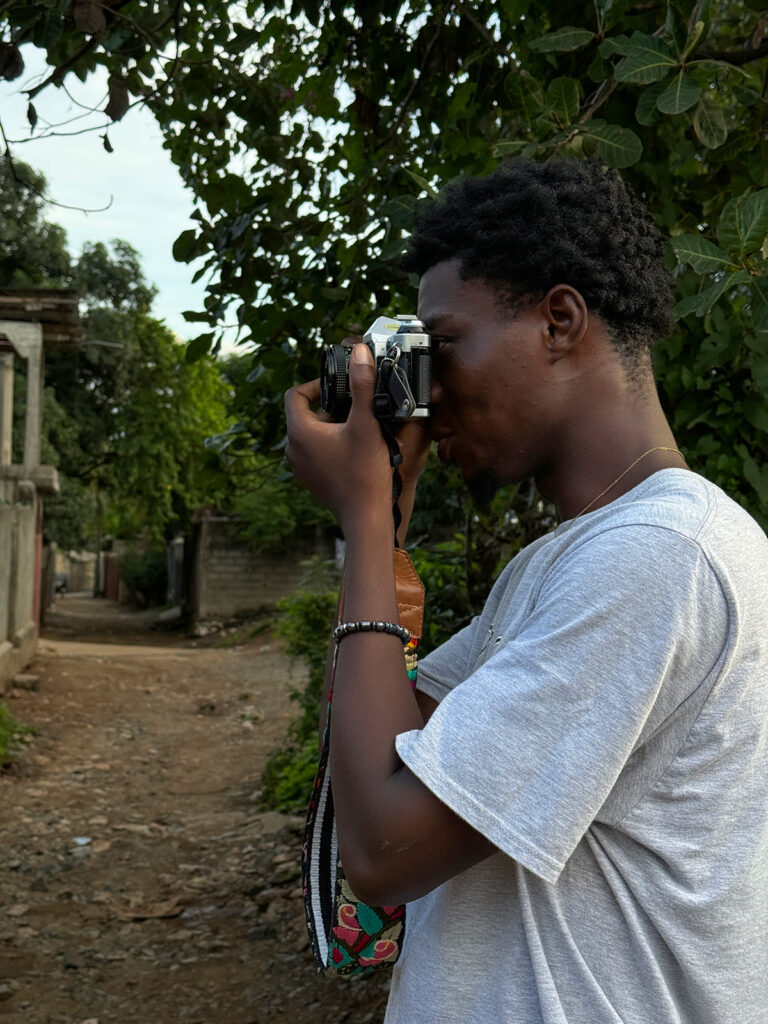
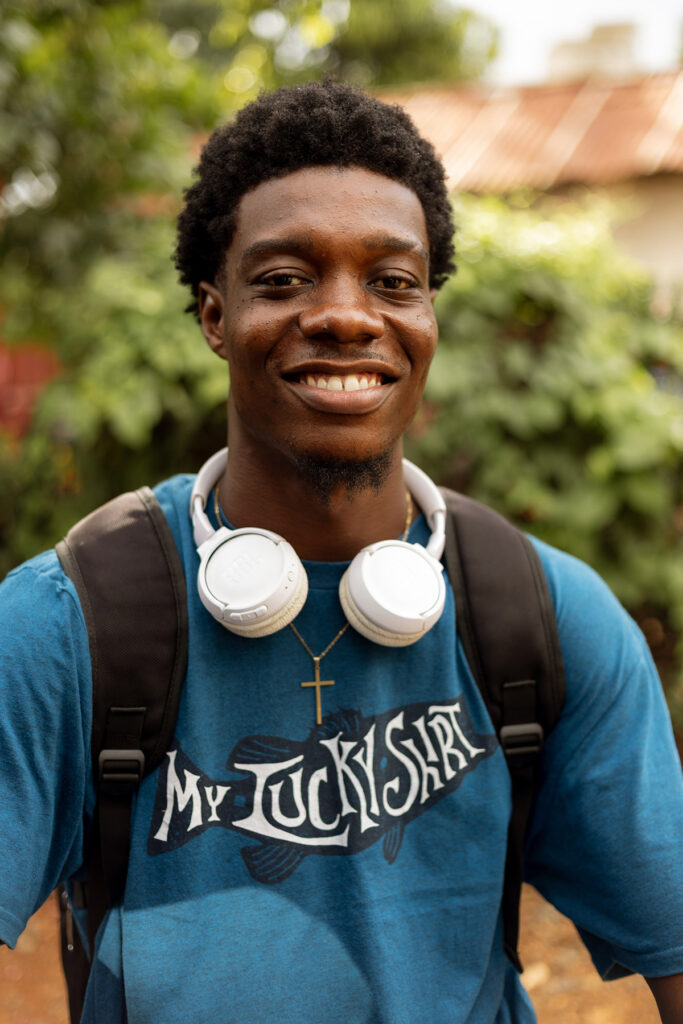
Since 2020, nearly every photo JiHM has shared in an email, social media post, or mailing has been taken by one young man—Dave, affectionately dubbed “Photo Man” by the students at Grace Emmanuel School.
Dave, now 28, became involved with JiHM through Victory Bible Church, where he was baptized in 2019 after coming to faith under the mentorship of his uncle Roger, JiHM’s Director of Operations. As he grew in his faith and service at the church, new opportunities opened—including learning photography. What began as a hobby became a calling to tell stories, capturing moments that might otherwise go unseen.
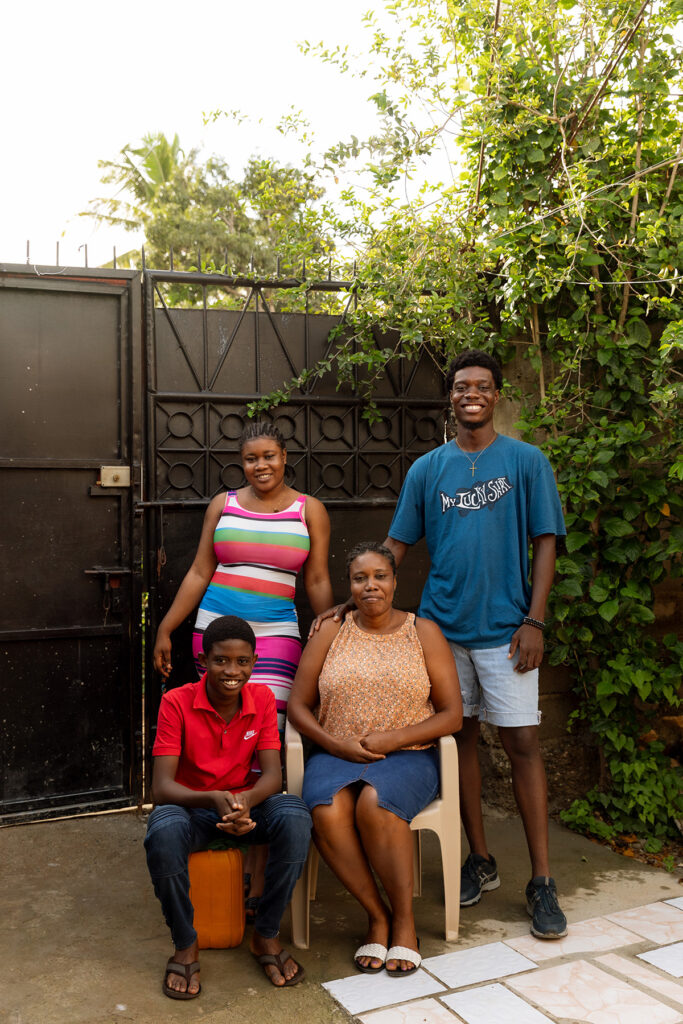
In 2023, Dave and his family were displaced during the attack on their hometown of Source Matelas. He eventually relocated to Cap-Haïtien in northern Haiti. Today, he continues to travel regularly to Grace Emmanuel School in Arcahaie—often an eight- or nine-hour journey by bus—passing through unstable areas along the way.
Behind each photo is patience, risk, joy, and deep care for the students he photographs.
We asked Dave to share more about himself and the heart behind his work with you. We hope you enjoy this glimpse behind the lens.
Q1. Can you tell us a little about how you first got started with photography?
For a long time, I wanted to become a mechanic. I even studied it after finishing school. But health problems prevented me from continuing. In His plan, God redirected me into photography.
During the COVID-19 lockdown, I became involved in videography. I was part of two groups that produced short series. I worked behind the camera and also acted in the series myself—some of those videos are still on YouTube.
During that time I was also volunteering as a youth leader at Victory Bible Church, and an opportunity opened up for a photography position with JiHM. The ministry helped train me so I could grow and master photography. Since then, I have become someone who tells stories from behind a camera.
Q2. What drew you to using a camera to tell stories?
I like to look at people beyond the surface. I believe photography is a powerful way to show who someone truly is and to capture the emotions inside them—their joy, their sadness, their reflection, and more.
For me, photography is about capturing a present moment and making it immortal.

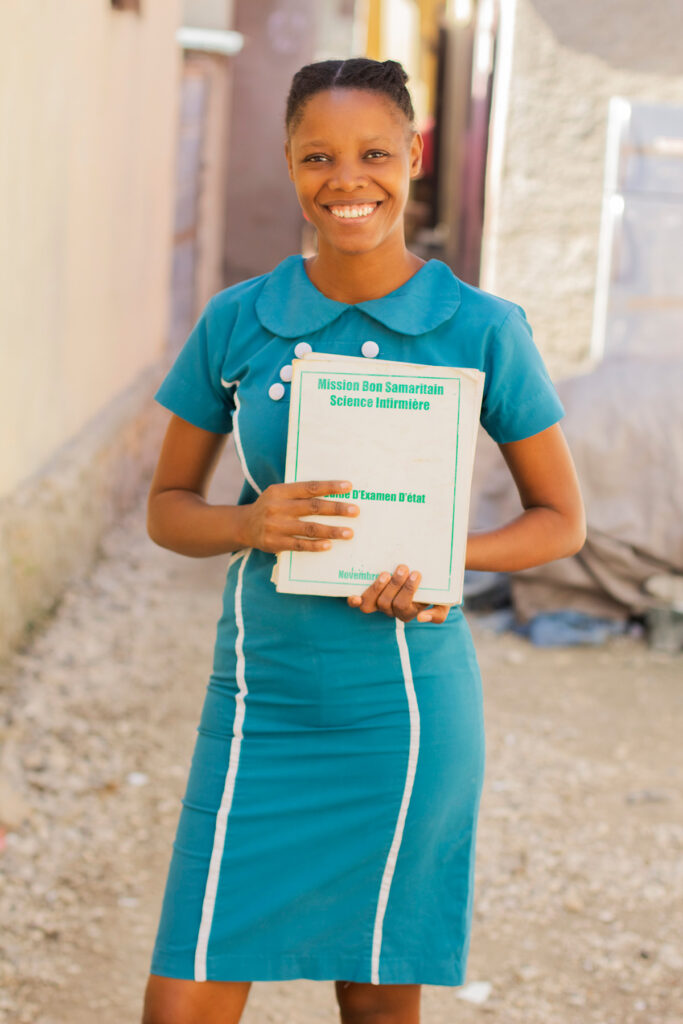
Q3. You’ve traveled repeatedly between Arcahaie, Cap-Haïtien, Village Demier, and even Port-au-Prince to photograph for JiHM. What motivates you to keep saying yes to these trips?
My love for my work and for photography. I feel alive and fulfilled every time I immortalize a moment. There is also a love I receive and share with people behind the camera. It’s a unique and beautiful feeling.
Q4. What goes through your mind as you prepare to travel through areas that can be risky? Are there any special precautions you take?
When I prepare to travel to Port-au-Prince or Cap-Haïtien, I do think about the dangers on the road. I take many precautions when traveling, especially with my camera. But I always remind myself that God is there. I trust Him deeply. He is great, and He protects His children. He aligns everything so that I can leave and return home safely.
One time I arrived home at 2:00 am. The car couldn’t continue because the road was too bad. I had to take a motorcycle for about 18 miles to reach home. The driver even fell with me because the road was muddy and difficult. But God allowed me to arrive home safely.
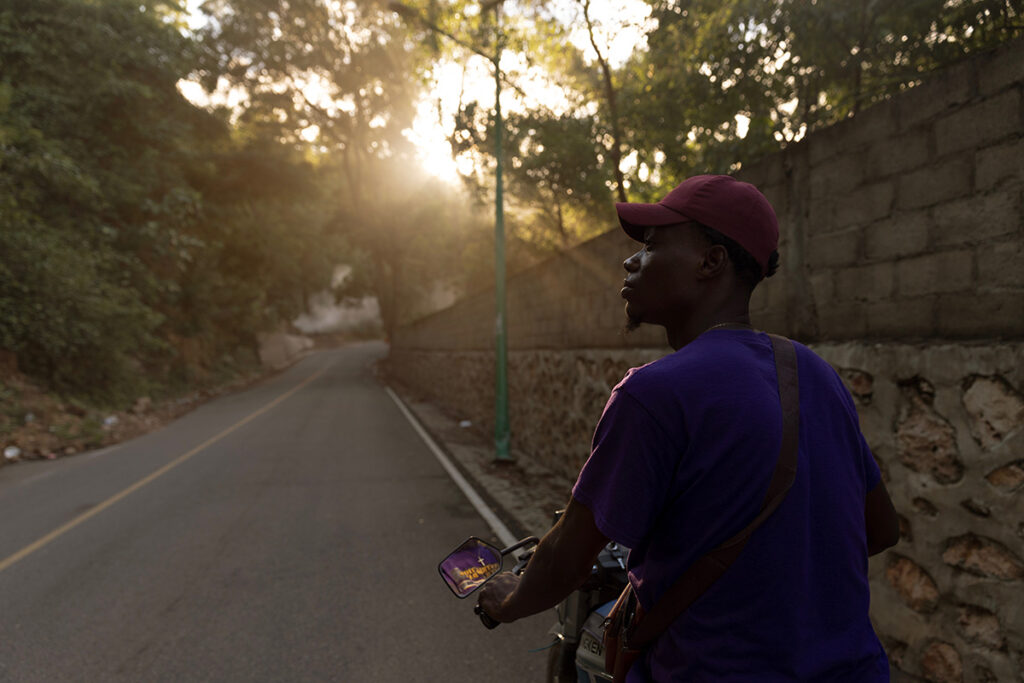
Q5. When you’re photographing students, what are you hoping to capture beyond a simple smile or portrait?
What I hope to show in photos is the love inside a person and the emotions within them.
I remember in Village Demier there was a child I had never seen smile. I always saw her serious or sad. During an activity, with my camera, I was able to capture her laughing. It made me so happy. That smile showed that she had life inside her—love and joy—even if she often appeared serious. I captured something that doesn’t always show on the surface, and that touched me deeply.

Q6. How do you help students feel comfortable when they step in front of your camera?
Simply by being myself and being funny. I let them know that when they see the camera, it’s for them—not for the other children—so they don’t feel shy. I let my love and passion for photography spread to them. I become their friend. I help them feel at ease so they can relax during photos.
With younger children, I play with them so they feel comfortable and don’t cry during pictures. Sometimes I enter the preschool classrooms and the children shout, “Photo man, come make light!” Every time I use the external flash, they get excited and shout, “Woooo!”
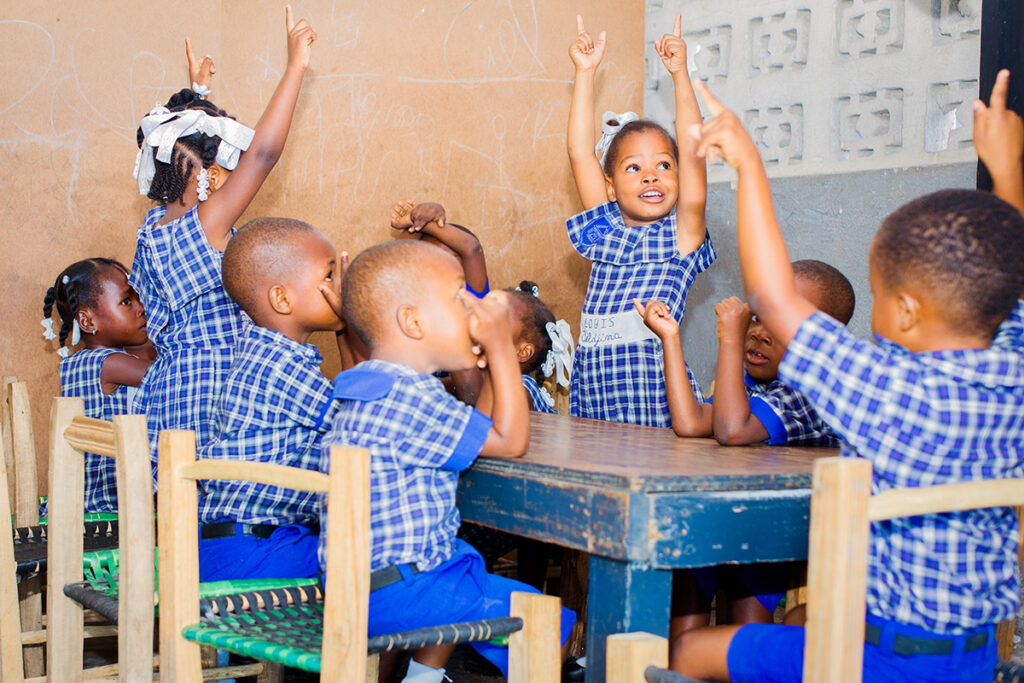
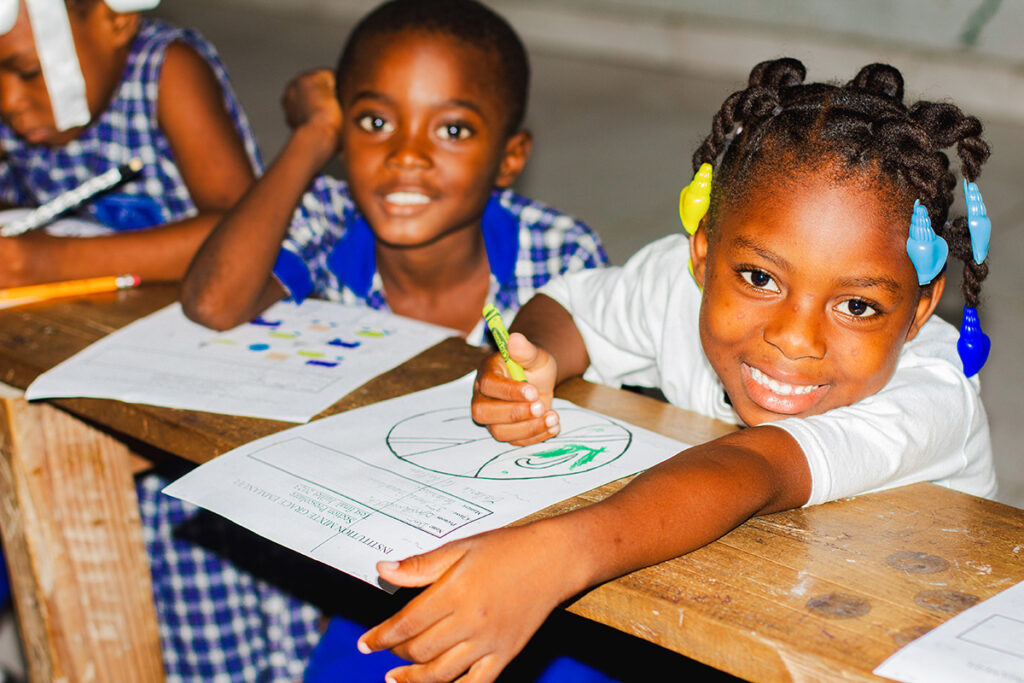
Q7. Is there a moment, student, or photo that has stayed with you in a special way? Can you tell us about that?
Many moments have marked me. Some children who used to cry in front of the camera are now my friends.
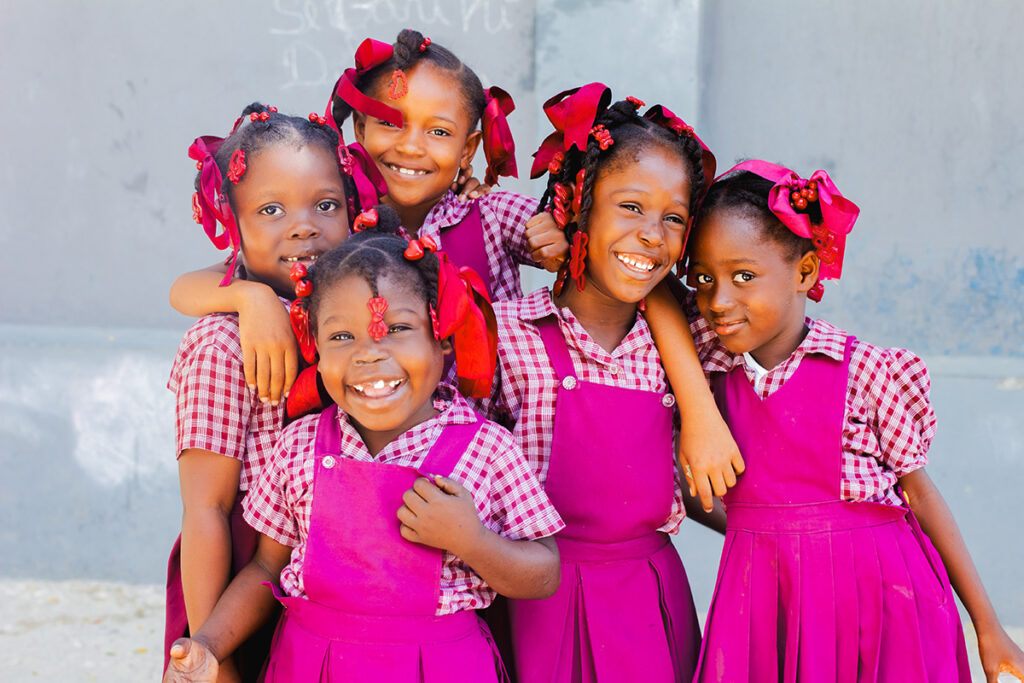
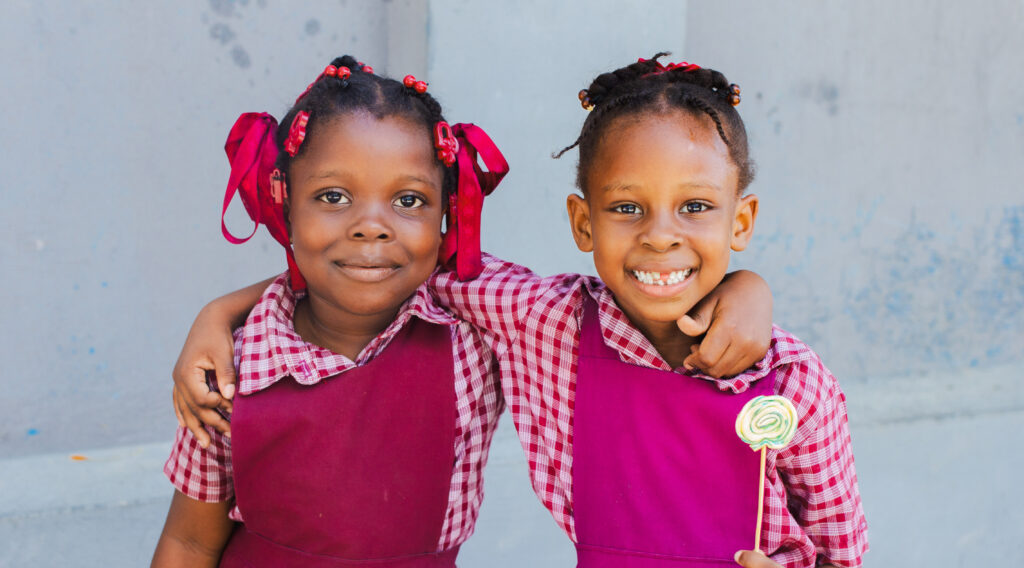
One story that stands out was when I needed smiling photos of several primary students—but they were all missing their front teeth. When a child is missing teeth, they often don’t want to smile! But I wanted to capture that special “missing tooth” moment. So I told them that anyone who agreed to smile in the photo could go with me to the street vendors and I would buy them whatever they wanted. After that, they were all comfortable smiling for the photo.
Q8. What is something people might not realize about the work that goes into getting just one photo they receive?
People don’t always realize the difficulties behind getting that photo. Sometimes I spend 20 minutes patiently waiting for one child to feel comfortable, especially the younger ones who cry. Other times, during events like graduations or school celebrations, I may take 200 to 400 photos just to get the one image I’m looking for.
My faith strongly influences my work. It gives me wisdom, love, and patience—just as God shows those things toward us.


Q9. When sponsors look at the photos you take, what do you hope they understand about the students—and about their own role in supporting them?
I hope they see that the students feel valued—that they matter and are important. Many children tell me they feel happiest when they are at school. Sponsors should know the kind of impact they are making. By choosing to help a student, they are giving that child hope. They are helping the child know that they matter. Because of them, that child has access to education and love—something many did not expect to receive, especially those from disadvantaged backgrounds or families without resources.

Q10. When you’re not behind the camera, what does a normal day look like for you?
When I’m not behind the camera, my days are simple. I do chores, read my Bible, listen to music, and help my mom. I also love learning from anyone who knows more than I do, especially through podcasts.
We are so grateful for Dave’s perseverance and growth in his photography, and we hope his story has inspired you as much as his photographs do. Every smile he captures reminds us of the hope and joy your support brings to the students at Grace Emmanuel School and the kids in Village Demier.
To send a note of appreciation to Dave, visit this link.
A few more of Dave’s photos